Acronal® 5400 AP
Acrylic Polymer for Potable Water Tank Waterproofing & Advanced Construction Applications
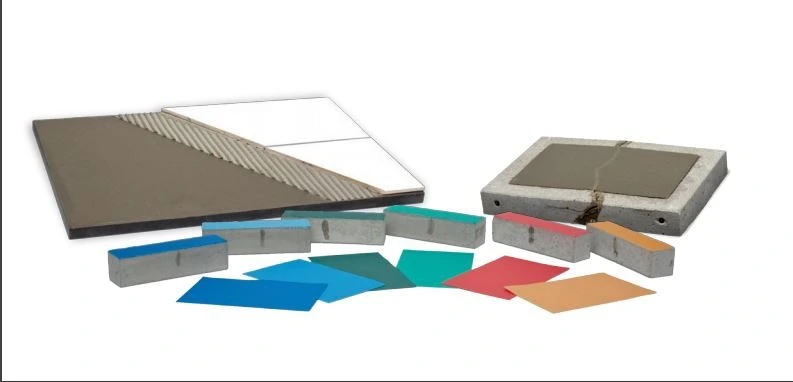
Acronal® 5400 AP is a high-performance styrene-acrylic dispersion polymer engineered for demanding flexible waterproofing applications. This advanced binder delivers outstanding workability, superior adhesion to mineral substrates, exceptional water resistance, and excellent crack-bridging capability for beneath-tile membranes, tile adhesives, and waterproofing slurries optimized for the Asia Pacific market.
Understand in More Detail
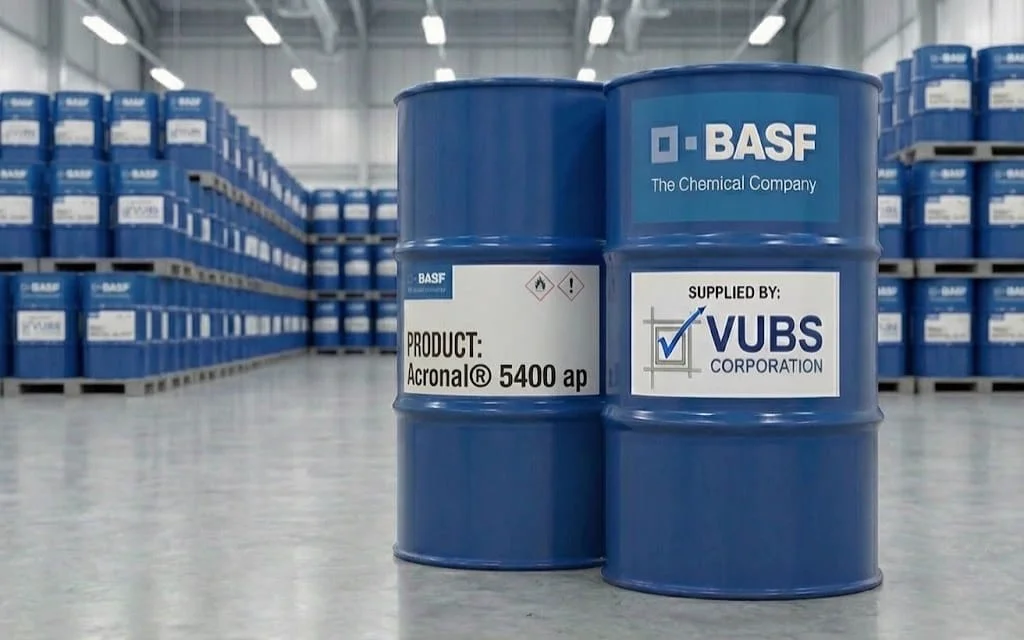
Acronal® 5400 AP is a sophisticated styrene-acrylic ester dispersion designed by BASF for construction chemical manufacturers requiring superior performance in flexible waterproofing systems. As the Asia Pacific optimized version of the globally proven Acronal 5400 platform, this anionic polymer dispersion has been specifically adapted for Indian tropical climate conditions, local cement chemistry compatibility, and regional raw material ecosystems. The formulation is built on breakthrough BASF polymer science that eliminates the need for external plasticizers through an exceptionally low film-forming temperature (MFFT < 1°C) combined with a glass transition temperature of -8°C. This self-plasticizing architecture not only simplifies formulation development but also ensures long-term flexibility retention even under challenging monsoonal moisture cycling and seasonal temperature extremes common across India. Acronal® 5400 AP is manufactured using environmentally responsible chemistry - completely free from alkylphenol ethoxylates (APEO), ammonia, and added plasticizers. This clean-label approach meets evolving regulatory requirements while delivering the peace of mind that comes from BASF's 150+ years of chemical engineering excellence. The stable viscosity profile (100-1600 mPa·s) provides consistent processing characteristics across temperature variations typical in Indian manufacturing environments. For formulators developing next-generation beneath-tile waterproofing membranes, tile adhesives, and repair mortars, Acronal® 5400 AP delivers an optimal balance of workability, early green strength contribution, and final mechanical properties. The polymer exhibits outstanding compatibility with various Indian cement types (OPC 43, OPC 53, PPC, PSC) while providing excellent adhesion to diverse mineral substrates including concrete, mortar, brick, and fiber cement boards. VUBS Corporation brings comprehensive technical support to help you unlock the full performance potential of this advanced polymer platform, including starting point formulations, application guidance, and performance optimization for your specific product requirements.
Product Features
Key Features
Applications
Technical Specifications
| Parameter | Specification |
|---|---|
| Chemical Nature | Aqueous anionic dispersion of acrylic ester copolymer |
| Solids Content (DIN EN ISO 3251) | 56 - 58% |
| pH Value (DIN ISO 976) | 5.5 - 7.5 |
| Viscosity at 23°C | 100 - 1600 mPa·s |
| Density | ~1.04 g/cm³ |
| Minimum Film Forming Temperature (MFFT) | <1°C |
| Glass Transition Temperature (Tg) | ~-8°C |
| Ionic Character | Anionic |
| Plasticizer Content | Free (None) |
| APEO Content | Free (Zero) |
| Ammonia Content | Free (Zero) |
| Freeze-Thaw Stability | Not freeze-stable, protect from frost (<5°C) |
| Metal Contact | Avoid unprotected metals except stainless steel |
| Shelf Life | 6 months at 10-30°C in sealed containers |
| Storage Temperature | 10-30°C, protect from direct sunlight |
| Typical Dosage Range | 15-25% by cement weight for waterproofing, 10-15% for tile adhesives |
Environmental Impact & Sustainability
Acronal® 5400 AP represents environmentally responsible construction chemistry through its clean formulation. The APEO-free (alkylphenol ethoxylate-free) composition eliminates persistent environmental pollutants known to bioaccumulate and disrupt endocrine systems in aquatic organisms, preventing contamination during manufacturing, application, and building lifecycle. The ammonia-free formulation reduces workplace exposure to respiratory irritants and eliminates nitrogen pollution in wastewater treatment. The plasticizer-free chemistry prevents compounds of concern from leaching over time, avoiding soil and groundwater contamination. Low VOC emissions contribute to improved air quality and reduced ground-level ozone formation. The product enables formulations supporting green building certifications including LEED credits for Low-Emitting Materials and Materials and Resources, and Indian Green Building Council (IGBC) requirements. The aqueous-based system eliminates solvent emissions, reducing hazardous air pollutants and worker exposure risks. Improved durability and performance extend service life of waterproofing systems, reducing renovation frequency and associated environmental impacts of material production, transportation, and construction. The product supports the construction industry's transition to sustainable practices while maintaining high performance standards for demanding waterproofing applications.
Handling and Safety Considerations
Acronal® 5400 AP should be handled following standard chemical handling precautions. Use in well-ventilated areas, although the ammonia-free formulation minimizes odor concerns. Wear appropriate personal protective equipment including chemical-resistant gloves for skin protection and safety glasses or goggles for eye protection. Avoid direct contact with eyes - if contact occurs, rinse immediately with copious amounts of water for at least 15 minutes and seek medical attention if irritation persists. The product is non-hazardous under normal handling conditions and does not require respiratory protection for typical scenarios. In case of skin contact, wash affected areas thoroughly with soap and water. If spillage occurs, contain the liquid, absorb with inert material, and dispose of in accordance with local regulations. The aqueous nature makes cleanup straightforward using water-based methods. Consult the Safety Data Sheet (SDS) for complete safety information. Personnel handling the product should be trained in basic chemical safety practices and maintain good industrial hygiene.
Labelling
Acronal® 5400 AP is not classified as hazardous under European Union CLP Regulation or equivalent international chemical classification systems. It is not classified as dangerous goods for transportation under UN Model Regulations, ADR/RID, IMDG, or IATA, simplifying logistics. The product does not require GHS hazard pictograms, signal words, or hazard statements. However, proper identification labeling should be maintained including product name, manufacturer (BASF SE), supplier (VUBS Corporation), batch number, manufacturing and expiration dates, and storage conditions. Label should include "Keep from freezing" as critical storage reminder. The product is fully registered under EU REACH regulation, and VUBS Corporation can provide registration numbers and compliance documentation. Eco-label claims including "APEO-free," "Ammonia-free," and "Plasticizer-free" can be substantiated with analytical certificates. All shipments include technical data sheets (TDS) and safety data sheets (SDS) in compliance with local regulations.
Storage and Shelf Life
Store Acronal® 5400 AP at temperatures between 10-30°C in tightly sealed containers to maintain product quality. The product has a shelf life of 6 months from the manufacturing date when stored under recommended conditions with proper hygiene. Containers must be kept tightly closed when not in use. The dispersion is NOT freeze-thaw stable and must be protected from freezing temperatures - exposure below 5°C can cause irreversible coagulation and loss of performance. Avoid storage temperatures above 60°C and protect from direct sunlight. Storage facilities should be dry, well-ventilated, and away from heat sources. The product must not contact bare iron, copper, or their alloys during storage as this can cause contamination - use stainless steel, HDPE, or coated containers. For bulk storage, the headspace should be kept saturated with water vapor to prevent surface drying. Treatment with suitable biocide is recommended for long-term storage to prevent microorganism growth. Rotate inventory on FIFO basis and label containers with batch numbers and dates for quality traceability.
Technical Support and Availability
Acronal® 5400 AP is available ex-stock at VUBS Corporation with comprehensive technical support. Our team provides formulation guidance, application assistance, and performance optimization support.
We at VUBS CORPORATION combine BASF's cutting-edge polymer technology with practical application expertise to help you develop superior construction chemical products. Contact us for technical data sheets, starting point formulations, and application-specific recommendations.
Frequently Asked Questions
Why is Acronal® 5400 AP specifically designed for use beneath tiles?
Acronal® 5400 AP is engineered to provide reliable waterproofing in the critical interface between substrates and tile installations. When applied beneath tiles, it creates a flexible, impermeable membrane that prevents water ingress while maintaining excellent adhesion to mineral substrates. The polymer's low film-forming temperature (<1°C) and glass transition temperature (-8°C) ensure effective barrier properties even at ambient temperatures without requiring external plasticizers. This is crucial for wet areas like bathrooms, kitchens, balconies, and terraces where water exposure is constant. The formulation's outstanding workability allows for fast application with reduced stickiness, making it easier to achieve uniform coverage before tile installation. Additionally, its compatibility with various cements and tile adhesives ensures system compatibility. The APEO-free, ammonia-free, and plasticizer-free chemistry supports green building initiatives while delivering the flexibility needed to accommodate structural movements without compromising the waterproof barrier—a common failure mode in rigid waterproofing systems beneath tiles.
What makes this product different from other waterproofing polymers for tile installations?
Acronal® 5400 AP stands out through its unique combination of workability, adhesion, and environmental credentials. The most notable differentiator is its exceptional workability—formulators and applicators consistently report faster construction times and reduced tool stickiness, which translates to lower labor costs and improved productivity on job sites. The product achieves this without compromising performance: it maintains superior adhesion to mineral substrates, which is critical for long-term reliability beneath tiles where bond failure can lead to costly repairs. The APEO, ammonia, and plasticizer-free formulation aligns with increasingly stringent environmental regulations and green building standards (LEED, BREEAM), making it suitable for projects requiring eco-certifications. The stable viscosity profile (100-1600 mPa·s) provides formulators with predictable processing characteristics, reducing batch-to-batch variability. Furthermore, the low MFFT and Tg (-8°C) mean that external plasticizers are typically unnecessary, simplifying formulations and reducing potential migration or leaching concerns in long-term wet exposure—a significant advantage for permanent waterproofing installations.
Can Acronal® 5400 AP be used for both interior and exterior tile waterproofing?
Yes, Acronal® 5400 AP is specifically formulated for both indoor and outdoor waterproofing applications beneath tiles. For interior applications such as bathrooms, wet rooms, kitchens, and commercial facilities, it provides reliable moisture protection against daily water exposure, steam, and humidity. The membrane resists water penetration while allowing the substrate to remain dimensionally stable. For exterior applications including balconies, terraces, pool decks, and facade systems, Acronal® 5400 AP offers enhanced durability against weathering, UV exposure, temperature fluctuations, and freeze-thaw cycles (when properly formulated and applied). The polymer's good resistance to carbonation and alkaline stability ensures long-term performance in outdoor cementitious systems. The flexibility inherent in the cured membrane is particularly valuable for exterior applications where thermal cycling causes substrate expansion and contraction—rigid waterproofing would crack, but Acronal® 5400 AP's flexibility accommodates these movements. However, as with all construction chemicals, preliminary trials are recommended for specific applications to verify compatibility with local materials, climatic conditions, and application methods, ensuring optimal adhesion, water resistance, and long-term durability.
What dosage should be used and how is it applied?
The typical dosage of Acronal® 5400 AP in waterproofing formulations ranges from 15-25% by cement weight, though specific recommendations depend on the application requirements, substrate conditions, and desired performance characteristics. For standard flexible waterproofing membranes, 18-22% is common, while high-performance systems may use up to 25% for enhanced flexibility and water resistance. For tile adhesive modification, 10-15% may be sufficient. The product is incorporated directly into cementitious formulations by mixing with water and then combining with hydraulic binders. For waterproofing slurries, the typical process involves: (1) diluting Acronal® 5400 AP with water to achieve the desired consistency, (2) gradually adding cement while mixing continuously to avoid lumps, (3) optionally adding fillers, pigments, or additives, and (4) applying the mixture using brush, roller, or trowel techniques in one or multiple coats depending on thickness requirements. For beneath-tile applications, a minimum dry film thickness of 1.5-2mm is typically recommended for reliable waterproofing. Due to the product's low viscosity and excellent workability, application is straightforward with good leveling properties. Curing should follow standard cementitious practices, maintaining adequate moisture during the curing period. VUBS Corporation can provide specific formulation recommendations and application guidelines tailored to your project requirements.
Is external plasticizer needed with Acronal® 5400 AP?
No, external plasticizers are typically not necessary when using Acronal® 5400 AP, which is one of its key advantages. The product has an exceptionally low minimum film-forming temperature (MFFT) of less than 1°C and a glass transition temperature (Tg) of approximately -8°C. These low values indicate that the polymer can form continuous, flexible films at ambient and even slightly cool temperatures without requiring plasticization. Adding external plasticizers to formulations with Acronal® 5400 AP is generally unnecessary and may actually be detrimental—plasticizers can negatively affect workability, reduce mechanical strength of cementitious products, potentially leach out over time in wet environments, and add unnecessary cost and complexity to formulations. The plasticizer-free nature of Acronal® 5400 AP also supports environmental and health objectives, as some plasticizers raise concerns about migration, VOC emissions, or long-term stability. If formulation trials indicate that additional flexibility is needed for extremely demanding applications, it's better to increase the polymer dosage rather than add plasticizers. However, for most beneath-tile waterproofing applications, the inherent flexibility of Acronal® 5400 AP at standard dosages (18-22% by cement weight) is more than adequate to accommodate normal substrate movements and thermal cycling without cracking or delamination.
What additives are compatible with Acronal® 5400 AP formulations?
Acronal® 5400 AP is broadly compatible with common construction chemical additives, but specific recommendations enhance performance and stability. Defoamers are recommended to control air void formation during processing—products like FoamStar® PB 2706 or Foamaster MO NXZ (0.3-0.5% dosage) effectively reduce entrapped air that can compromise waterproofing integrity and surface finish. Thickeners should be selected carefully: conventional cellulosic thickeners can cause excessive stiffening and disrupt cement setting, potentially impairing wet strength. For achieving sag-resistant consistency in vertical applications, polyurethane-based thickeners like Rheovis® PU 1191 or Collacral® PU 75 are recommended as they provide controlled rheology without interfering with hydraulic setting. Preservatives are advisable to protect finished formulations against microbial attack during storage—in-can preservatives extending shelf life to 6-12 months are common practice. Fillers such as ground quartz, fine sand, microdolomite, and chalk are well-tolerated and can be used to adjust viscosity, reduce cost, or improve specific properties. Pigments for colored waterproofing systems are generally compatible. Dispersants may be added to achieve homogeneous final products. It is critical to conduct preliminary trials for each specific formulation to verify compatibility, storage stability, and final product performance. VUBS Corporation's technical team can recommend optimal additive combinations for your specific application needs.
How should formulations with Acronal® 5400 AP be stored and what is the shelf life?
Acronal® 5400 AP as supplied has a shelf life of approximately six months from the manufacturing date when stored properly in tightly sealed containers at temperatures between 10-30°C, protected from direct sunlight and frost. The product must never be allowed to freeze, as freeze-thaw cycling will irreversibly damage the polymer dispersion, causing coagulation and loss of performance. During storage, avoid contact with unprotected metals (except stainless steel) as the anionic dispersion can cause corrosion. For finished formulations incorporating Acronal® 5400 AP (such as ready-to-use waterproofing slurries or tile adhesive premixes), shelf life depends on several factors: the preservative system used, storage conditions, packaging integrity, and hygiene during manufacturing. Powder-polymer blends stored in moisture-proof packaging can typically achieve 12+ months shelf life. Wet formulations (pre-mixed slurries) require robust preservative treatment and can usually be stored for 3-6 months under proper conditions. It is essential to maintain good tank hygiene and add appropriate preservatives during formulation to protect against bacterial, fungal, and algal contamination, which can degrade both the polymer and cementitious components. Regular turnover of inventory using FIFO (first-in, first-out) practices, proper labeling with manufacturing and expiration dates, and periodic quality checks are recommended. VUBS Corporation supplies Acronal® 5400 AP with full traceability and can provide preservative recommendations for extended shelf life in finished products.
What quality control tests should be performed and what are typical properties?
Comprehensive quality control ensures consistent performance in Acronal® 5400 AP formulations. For the polymer dispersion itself, verify: solids content (target 56-58% by DIN EN ISO 3251), pH value (target 5.5-7.5 by DIN ISO 976), viscosity at 23°C (100-1600 mPa·s), and visual inspection for homogeneity and absence of coagulation or skin formation. Storage stability testing at various temperatures confirms shelf life. For finished formulations, critical tests include: pot life/open time (should be sufficient for application), workability/flow (cone flow or slump tests), wet adhesion to substrates (pull-off tests on tile or concrete), water resistance (immersion or pressure testing of cured samples), flexibility/crack-bridging (elongation tests or crack-bridging apparatus showing ability to span 1-2mm cracks), bond strength (shear and tensile adhesion to various substrates), water absorption (capillary water uptake tests), and storage stability (checking for separation, settling, or viscosity change over 3-6 months). Typical performance properties for a standard waterproofing slurry formulated with Acronal® 5400 AP at 20% dosage include: bond strength >0.5 MPa to concrete, crack-bridging capability >1.5mm at -5°C, water penetration depth <10mm under pressure, and elongation at break >100%. For tile adhesive applications, C2 S2 classification (improved adhesion + deformable) is often achievable according to EN 12004 standards. VUBS Corporation can provide detailed testing protocols and assist with formulation optimization to meet specific performance targets or industry standards.
Important Testing & Liability Disclaimer: The technical specifications and performance data presented herein are derived from controlled laboratory conditions and standardized testing environments. Actual performance may vary significantly based on application-specific conditions, formulation variables, environmental factors, and processing parameters. All customers are strongly advised to conduct comprehensive application testing and validation trials prior to commercial-scale production or project deployment. VUBS Corporation supplies products strictly on an "as-is" basis and expressly disclaims all liability for any direct, indirect, incidental, consequential, or punitive damages arising from product use, application, or performance. Customers assume full and sole responsibility for product suitability assessment, application testing, quality control, and all associated risks. Due to strong market demand and limited inventory availability, procurement decisions should be made expeditiously following successful validation testing. For technical consultation and sample procurement, please contact our team.
Interested in Acronal® 5400 AP?
Get technical specifications, request samples, or speak with our experts for application support.
More Polymers for Construction Chemicals
Explore other BASF products in this category
Styrofan® D 623 AP
Admired Worldwide for Consistency and Performance
STYROFAN D 623 of BASF is admired by customers worldwide for its consistency and performance. Products manufactured in the Asia Pacific region by BASF are promoted with the AP suffix, while European products use SE.
Learn MoreStyrofan® ECO 7623
Zero-APEO Styrene-Butadiene Dispersion - Eco-Certified Performance for High-Strength Construction
Styrofan® ECO 7623 is BASF's zero-APEO styrene-butadiene dispersion delivering exceptional strength and water resistance for sustainable construction. With 50-52% solids content and pH 7-9, it excels in flexible tile adhesives, waterproofing mortars, and concrete repair. Meeting Blue Angel and EU Ecolabel standards, it provides superior performance with zero phthalates, formaldehyde, and ammonia.
Learn MoreAcronal® S 400 AP
High-Performance Acrylic Dispersion for Flexible Mortars
VUBS Corporation supplies Acronal® S 400 AP, BASF's premium acrylic dispersion engineered for superior crack-bridging performance in flexible cementitious systems. This versatile polymer delivers exceptional hydraulic binder compatibility, enabling formulators to create high-performance mortars, adhesives, and waterproofing membranes that combine mechanical strength with long-term flexibility. Ideal for demanding applications requiring reliable water resistance and substrate movement accommodation.
Learn More