Acronal® 7801
1K Mastic Protection for Elastomeric Applications
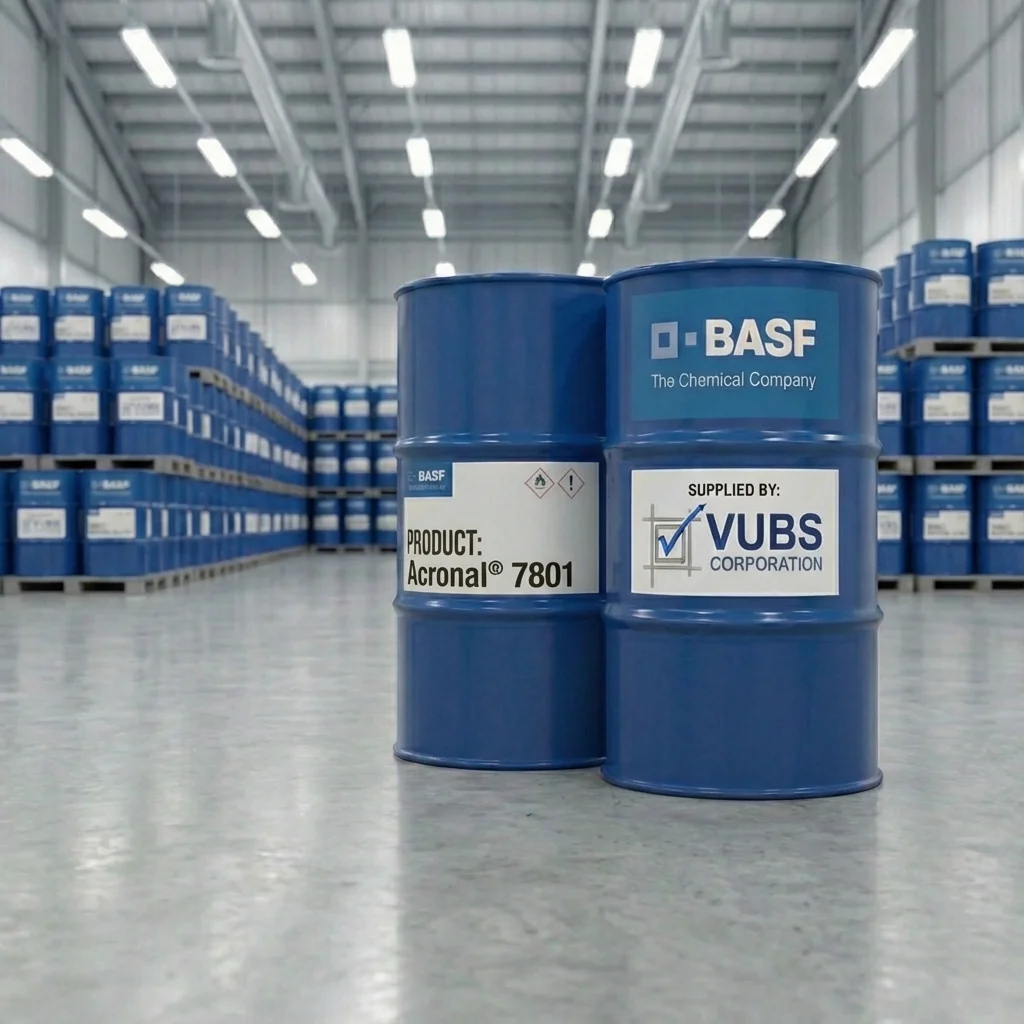
ACRONAL® 7801 offers a robust combination of water resistance and elasticity, making it ideal for elastomeric applications where durability and longevity are critical.
Understand in More Detail
This one-component high-performance acrylic dispersion offers excellent performance with simplified processing compared to two-component systems. Delivering very good chemical resistance, excellent workability, and superior weathering performance, it provides formulators a versatile solution for architectural coatings and general-purpose high-performance applications. The ready-to-use 1K formulation eliminates mixing requirements and extends shelf life. At VUBS Corporation, we provide technical support for Acronal® 7801 implementation, helping customers develop high-quality coating systems that balance performance, ease of use, and cost-effectiveness for commercial and architectural applications.
Key Features
Applications
Application Showcase
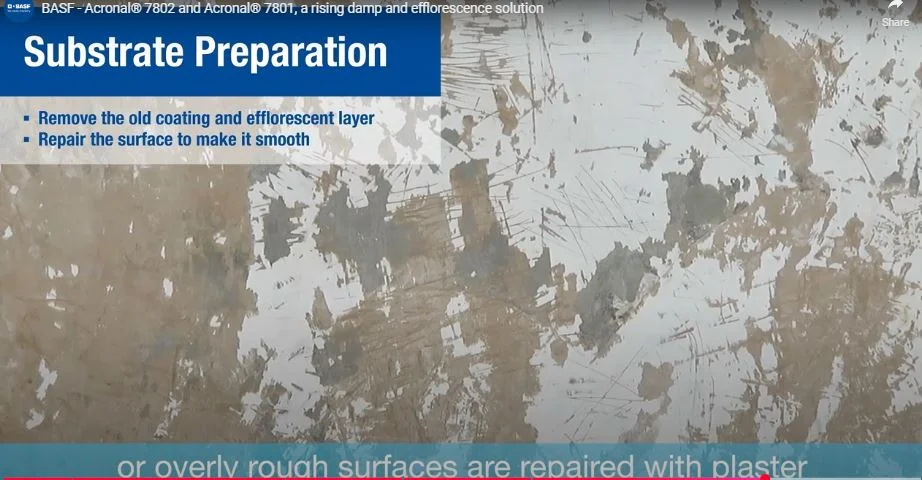
Substrate condition before application
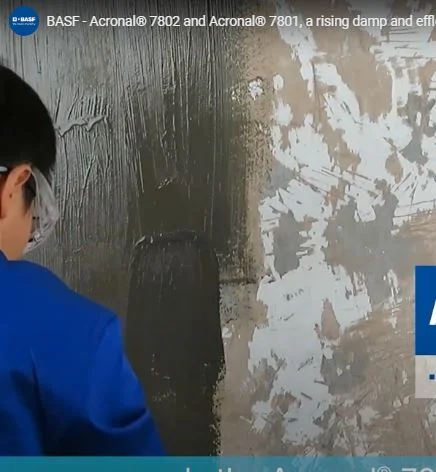
Application in progress / completed
Dual Protection System
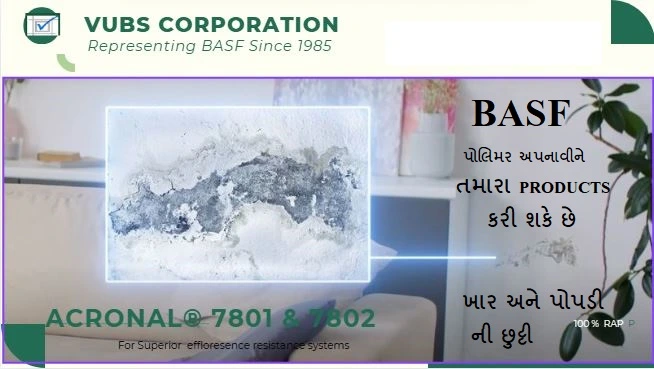
Acronal® 7802 and Acronal® 7801 form a cutting-edge dual protection system that addresses the challenges of rising damp and efflorescence. This innovative solution offers multiple layers of security, ensuring exceptional durability for your wall system. By combining 2K cementitious protection of Acronal® 7802 and 1K mastic protection of Acronal® 7801, BASF provides comprehensive defence against the damaging effects of moisture. With this breakthrough technology, you can have peace of mind knowing that your walls are protected from the inside out.
Sustainable & Certified
Both ACRONAL® 7801 and 7802 support sustainable building practices. Their low-VOC and APEO-free formulations make them ideal for environmentally responsible product development.
Technical Support and Availability
Acronal® 7801 is available ex-stock at VUBS Corporation with comprehensive technical support. Our team provides formulation guidance, application assistance, and waterproofing system optimization support.
We at VUBS CORPORATION combine BASF's cutting-edge polymer technology with practical application expertise to help you develop superior 1K mastic and protective coating systems. Contact us for technical data sheets, starting point formulations, and dual protection system recommendations.
Frequently Asked Questions
What makes Acronal® 7801 "breathable" and why is this important for efflorescence protection?
Acronal® 7801's breathability refers to its ability to allow water vapor to pass through the coating while simultaneously blocking the migration of dissolved salts. This dual functionality is critical for efflorescence protection. When moisture is trapped within masonry substrates (common in basement walls, foundations, and structures with rising damp), it creates hydrostatic pressure that can cause coatings to delaminate or blister. Acronal® 7801's breathable film structure allows this trapped moisture to escape as vapor, relieving pressure and preventing coating failure. At the same time, the coating blocks dissolved salts from migrating to the surface where they would crystallize as efflorescence (white deposits). This selective permeability is achieved through the polymer's molecular structure and film formation characteristics. The practical benefits include prevention of coating blistering or peeling from trapped moisture, elimination of efflorescence on surfaces, maintenance of substrate drying capability for long-term health, suitability for historic buildings requiring vapor-permeable treatments, and compatibility with the Acronal® 7802 anchor layer in the dual protection system. This breathability makes 7801 fundamentally different from impermeable waterproofing which traps moisture, often leading to subsurface degradation.
How should Acronal® 7801 be applied as the seal layer in the dual protection system?
Acronal® 7801 application as the seal layer requires proper timing and technique for optimal performance. Substrate Preparation: The Acronal® 7802 anchor layer must be fully cured before applying 7801. Typical curing time is 24-48 hours depending on temperature, humidity, and layer thickness, though specific project conditions may vary. The anchor layer surface should be clean and free from dust or loose particles. Application Method: Acronal® 7801 is typically applied as a 1K (one-component) mastic using brush, roller, or spray equipment. Brush application is common for smaller areas or detailed work, providing good control and penetration. Layer Thickness: For effective salt-blocking performance while maintaining breathability, typical dry film thickness is 1-2mm, often achieved in 1-2 coats. Thicker applications may reduce breathability, while thinner applications may not adequately block salt migration. Coverage: Ensure complete, uniform coverage with particular attention to edges, joints, and penetrations where efflorescence commonly initiates. Curing: Allow adequate curing before exposure to severe weather or applying subsequent finishes. Maintain moderate temperatures (10-30°C) during application and initial curing. System Integration: The combination of 7802 (dense anchor layer preventing rising damp) and 7801 (breathable seal blocking salts) creates a synergistic protection system where each layer complements the other's function. For specific formulation recipes, application parameters, and troubleshooting guidance, VUBS Corporation provides technical support and can supply sample formulations for trials.
In what applications is Acronal® 7801 most beneficial compared to standard waterproofing?
Acronal® 7801 excels in applications where both moisture management and salt control are critical. Prime applications include basement and cellar walls with rising damp where impermeable waterproofing would trap moisture. Historic masonry restoration benefits as many historic buildings require breathable treatments to avoid moisture trap and deterioration. Marine and coastal structures see advantages as salt spray causes severe efflorescence, and 7801's salt-blocking breathability excels. Agricultural buildings such as silage pits experience both moisture and chemical exposure. Parking structures and bridges face de-icing salt contamination, and 7801 protects while allowing vapor escape. Remedial treatments for existing efflorescence prevent recurrence while existing moisture dries out.Less suitable applications include scenarios requiring absolute impermeability against liquid water under pressure. The unique value of 7801 is its specialized function of managing vapor transmission and salt migration simultaneously.
Can Acronal® 7801 be used without the 7802 anchor layer?
While Acronal® 7801 can be used independently as a breathable protective coating, its full efflorescence protection capability is realized when used with Acronal® 7802. Standalone applications include facade coatings requiring vapor permeability and protective mastics where breathability is desired. However, limitations exist: direct application to substrates with active rising damp may not provide sufficient moisture barrier without the dense 7802 anchor layer. The dual-layer system benefits are significant: 7802 creates a robust anchor preventing rising damp, while 7801 seals over it, allowing trapped moisture to escape while blocking salt migration. For comprehensive efflorescence protection in basements, foundations, and salt-exposed structures, VUBS Corporation strongly recommends the complete dual-layer system.
What is the difference between 1K and 2K systems and why does this matter?
The distinction between 1K and 2K systems is fundamental. 1K Systems like Acronal® 7801 are ready-to-use with simplified application, no mixing errors, longer pot life, and reduced waste. They cure through evaporation or coalescence. 2K Systems like Acronal® 7802 require mixing polymer with cement before use, providing higher mechanical strength through chemical reaction but with limited pot life and more complex quality control. The BASF dual-layer system strategically uses both: 7802 as 2K anchor provides maximum strength and adhesion, while 7801 as 1K seal offers application simplicity. This delivers engineered performance with practical convenience. VUBS Corporation provides detailed protocols for both components.
Where can I purchase Acronal® 7801 in India and what technical support is available?
Acronal® 7801 is available ex-stock from VUBS Corporation, the authorized BASF distributor for construction chemical polymers in India. We maintain strategic inventory ensuring prompt delivery across India. Comprehensive support includes formulation development assistance, system implementation guidance, performance testing recommendations, application expertise with on-site visits when needed, and documentation for compliance. Our team combines BASF's global expertise with deep knowledge of Indian markets and regional challenges including monsoon waterproofing and coastal salt environments. Contact us for product availability, pricing, technical literature, trial samples, or to schedule consultations for developing effective efflorescence protection systems.
Important Testing & Liability Disclaimer: The technical specifications and performance data presented herein are derived from controlled laboratory conditions and standardized testing environments. Actual performance may vary significantly based on application-specific conditions, formulation variables, environmental factors, and processing parameters. All customers are strongly advised to conduct comprehensive application testing and validation trials prior to commercial-scale production or project deployment. VUBS Corporation supplies products strictly on an "as-is" basis and expressly disclaims all liability for any direct, indirect, incidental, consequential, or punitive damages arising from product use, application, or performance. Customers assume full and sole responsibility for product suitability assessment, application testing, quality control, and all associated risks. Due to strong market demand and limited inventory availability, procurement decisions should be made expeditiously following successful validation testing. For technical consultation and sample procurement, please contact our team.
More Polymers for Construction Chemicals
Explore other BASF products in this category
Styrofan® D 623 AP
Admired Worldwide for Consistency and Performance
STYROFAN D 623 of BASF is admired by customers worldwide for its consistency and performance. Products manufactured in the Asia Pacific region by BASF are promoted with the AP suffix, while European products use SE.
Learn MoreStyrofan® ECO 7623
Zero-APEO Styrene-Butadiene Dispersion - Eco-Certified Performance for High-Strength Construction
Styrofan® ECO 7623 is BASF's zero-APEO styrene-butadiene dispersion delivering exceptional strength and water resistance for sustainable construction. With 50-52% solids content and pH 7-9, it excels in flexible tile adhesives, waterproofing mortars, and concrete repair. Meeting Blue Angel and EU Ecolabel standards, it provides superior performance with zero phthalates, formaldehyde, and ammonia.
Learn MoreAcronal® S 400 AP
High-Performance Acrylic Dispersion for Flexible Mortars
VUBS Corporation supplies Acronal® S 400 AP, BASF's premium acrylic dispersion engineered for superior crack-bridging performance in flexible cementitious systems. This versatile polymer delivers exceptional hydraulic binder compatibility, enabling formulators to create high-performance mortars, adhesives, and waterproofing membranes that combine mechanical strength with long-term flexibility. Ideal for demanding applications requiring reliable water resistance and substrate movement accommodation.
Learn More