Acronal® 7802
The First Protection – 2K Cementitious Membrane
ACRONAL® 7802 is a high-performance aqueous dispersion designed to deliver excellent bonding strength and flexibility, even in low-temperature conditions. A breakthrough long-term solution from BASF as an anchor layer for superior efflorescence resistance systems.
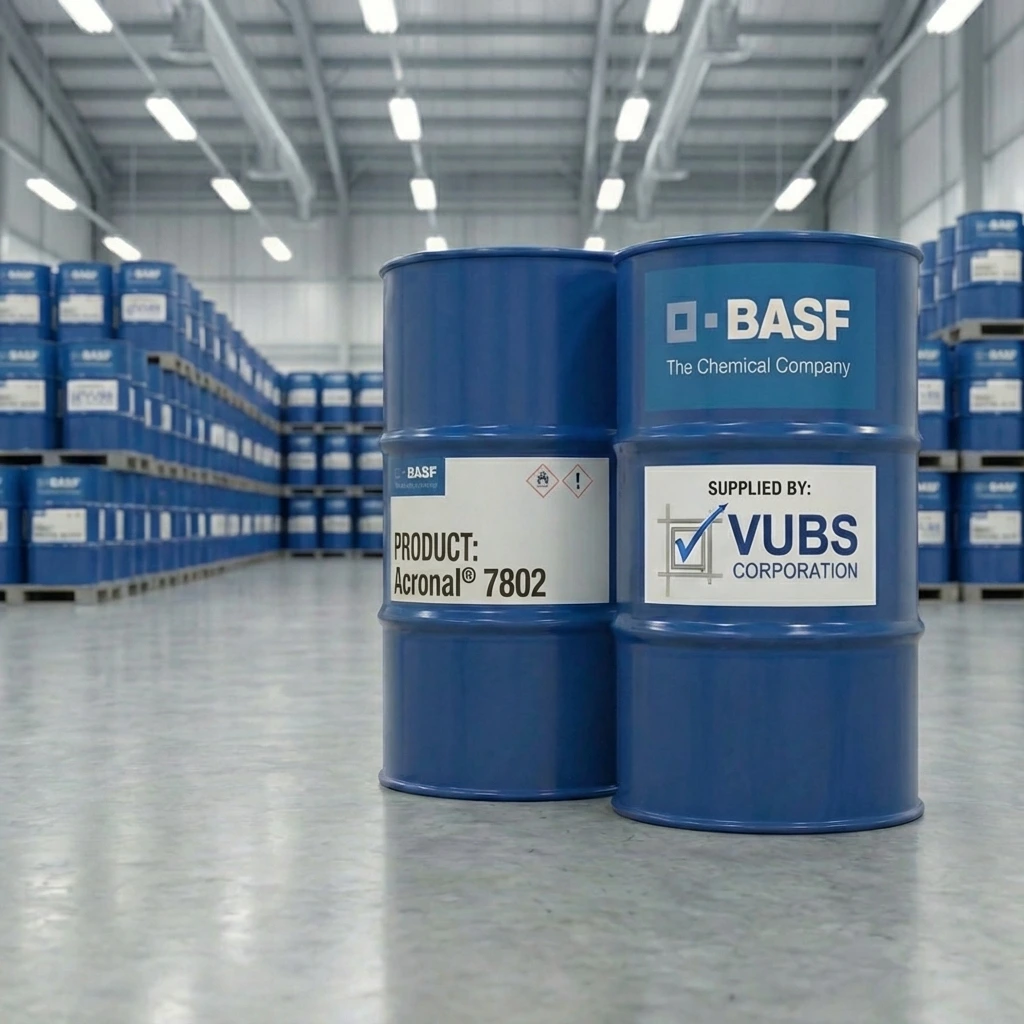
Understand in More Detail
This high-performance two-component acrylic dispersion system delivers exceptional chemical resistance and mechanical properties for demanding industrial applications. Requiring external crosslinker activation, it provides superior durability, outstanding weathering resistance, and excellent chemical resistance after curing. The 2K system enables formulators to achieve industrial-grade performance characteristics for high-performance coatings, industrial floor systems, and demanding environments. At VUBS Corporation, we provide comprehensive technical guidance for Acronal® 7802 implementation, including crosslinker selection, mixing protocols, pot life management, and application optimization for superior long-term performance.
Key Features
Applications
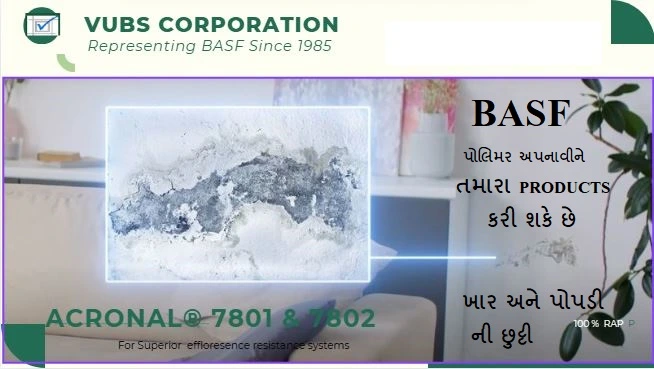
Application Showcase
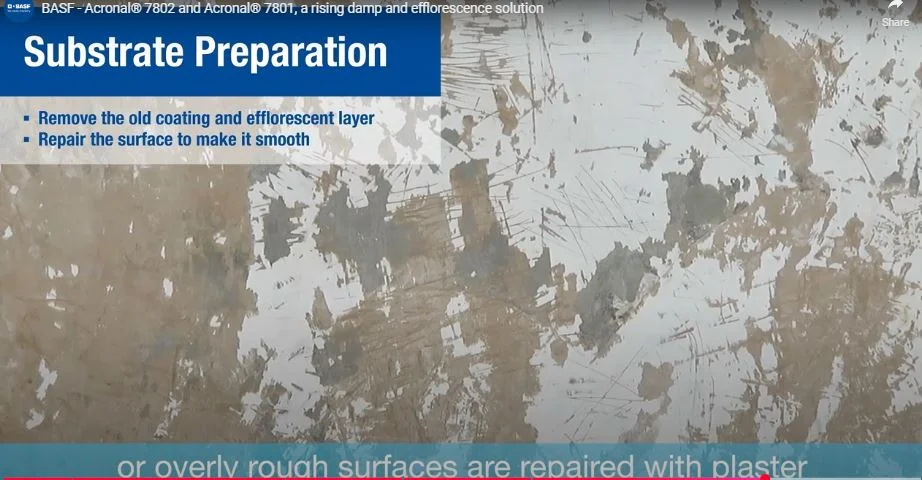
Substrate condition before application
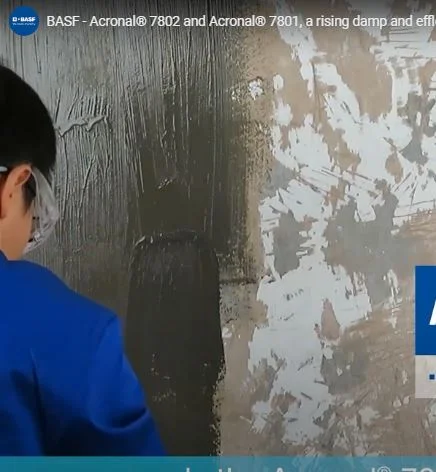
Application in progress / completed
Dual Protection System
Acronal® 7802 and Acronal® 7801 form a cutting-edge dual protection system that addresses the challenges of rising damp and efflorescence. This innovative solution offers multiple layers of security, ensuring exceptional durability for your wall system. By combining 2K cementitious protection of Acronal® 7802 and 1K mastic protection of Acronal® 7801, BASF provides comprehensive defence against the damaging effects of moisture. With this breakthrough technology, you can have peace of mind knowing that your walls are protected from the inside out.
Sustainable & Certified
Both ACRONAL® 7801 and 7802 support sustainable building practices. Their low-VOC and APEO-free formulations make them ideal for environmentally responsible product development.
Technical Support and Availability
Acronal® 7802 is available ex-stock at VUBS Corporation with comprehensive technical support. Our team provides formulation guidance, application assistance, and waterproofing system optimization support.
We at VUBS CORPORATION combine BASF's cutting-edge polymer technology with practical application expertise to help you develop superior cementitious waterproofing and protective coating systems. Contact us for technical data sheets, starting point formulations, and dual protection system recommendations.
Frequently Asked Questions
What is the dual-layer efflorescence protection system and how does Acronal® 7802 fit in?
The BASF dual-layer efflorescence protection system is an engineered solution addressing a common problem in masonry construction: rising damp carrying dissolved salts through walls, where they crystallize (efflorescence) on surfaces, causing unsightly white deposits, paint failure, and long-term structural degradation. The system uses two specialized acrylic dispersions working in tandem: Layer 1 (Anchor Layer) - Acronal® 7802 is applied directly onto the substrate as a 2K (two-component) cementitious membrane. This layer creates a dense film with outstanding adhesion to mineral substrates, forming a robust mechanical anchor that prevents rising damp from penetrating upward. The excellent flexibility and low water uptake ensure the anchor layer remains intact under stress. Layer 2 (Seal Layer) - Acronal® 7801 is then applied as a 1K (one-component) mastic coating over the anchor layer. This breathable seal layer allows trapped moisture within the substrate to escape while simultaneously blocking salt deposits from migrating outward. The combination provides comprehensive defense: 7802 stops water ingress from below, while 7801 prevents salt crystallization on the surface. This dual protection ensures prolonged durability for wall systems in challenging moisture conditions, particularly in basements, foundations, historic buildings, and areas with high groundwater or capillary rise. The system has been extensively validated in real-world applications and represents BASF's advanced approach to moisture and efflorescence control.
Can Acronal® 7802 be used alone, or must it always be paired with Acronal® 7801?
While Acronal® 7802 can be used independently in applications requiring high-performance cementitious waterproofing with excellent adhesion and flexibility, its full potential is realized when used as part of the dual-layer efflorescence protection system with Acronal® 7801. Independent use cases include: flexible roof coatings where the primary requirement is crack-bridging and weather resistance; construction adhesives needing exceptional substrate adhesion; facade paints requiring flexibility and carbonation resistance; and general waterproofing membranes where efflorescence is not a primary concern. In these applications, Acronal® 7802 delivers excellent performance as a standalone solution. However, for comprehensive efflorescence protection, the dual-layer system is strongly recommended. Efflorescence occurs when moisture carries dissolved salts through masonry; water evaporates at the surface, leaving crystallized salts that cause white deposits, staining, and deterioration. A single-layer approach may block water but can trap salts within the substrate, leading to subsurface damage. The dual-layer system with 7802 (anchor) and 7801 (seal) addresses both moisture ingress and salt migration simultaneously. The 7802 anchor layer stops rising damp from below, while the 7801 seal layer allows the substrate to breathe and prevents salt crystallization on the surface. For basement waterproofing, historic restoration, and any application where salt-related damage is a concern, the complete system provides far superior long-term protection. VUBS Corporation can provide system application guidelines and technical support for both standalone and dual-layer configurations.
What are the typical application methods and layer thicknesses for the anchor layer?
Acronal® 7802 anchor layer application requires proper surface preparation and systematic coating procedures for optimal performance. Surface Preparation: Substrates must be clean, sound, and free from loose particles, dust, oil, grease, curing compounds, or other contaminants that could compromise adhesion. Highly porous or damaged substrates may require pre-treatment with a primer or consolidating agent. Surface moisture content should be controlled—overly dry substrates may require dampening to prevent rapid water absorption from the coating, while excessively wet surfaces should be allowed to dry to surface-dry condition. Mixing: Acronal® 7802 is formulated for 2K (two-component) cementitious systems. The polymer is mixed with water first, then combined with cement and optional fillers (sand, quartz) according to the formulation recipe. Mixing should be thorough using mechanical stirrers to achieve a homogeneous, lump-free consistency. Application Methods: The anchor layer can be applied by brush, roller, or trowel depending on viscosity and substrate. For walls, brush or roller application in cross-hatch patterns ensures full coverage. For larger areas or thicker builds, trowel application may be preferred. Layer Thickness: For anchor layers in efflorescence protection systems, typical dry film thickness is 2-3mm, often achieved in two coats (1-1.5mm each) with appropriate curing time between coats. For general waterproofing membranes, 1.5-2.5mm total thickness is common. Thicker applications may require multiple coats to prevent sagging and ensure proper curing. Curing: Allow adequate curing time between coats (typically 24 hours depending on temperature and humidity) and before applying the Acronal® 7801 seal layer. Maintain moisture during curing by misting if necessary in hot, dry conditions.
How does the crack-bridging capability work, especially at low temperatures?
Acronal® 7802's excellent flexibility and crack-bridging performance, even in low-temperature conditions, stems from its carefully engineered polymer architecture and glass transition temperature (Tg). Mechanism of Crack-Bridging: When cracks develop in a substrate due to structural settlement, thermal cycling, or shrinkage, a rigid coating would simply fracture along the crack line. However, Acronal® 7802's flexibility allows the cured membrane to elongate and span across crack openings without tearing or losing adhesion. The polymer forms an elastomeric network within the cementitious matrix, providing a balance between mechanical strength and deformability. Low-Temperature Performance: Many polymers become brittle at low temperatures, losing their crack-bridging capability precisely when thermal contraction stresses are highest (winter conditions). Acronal® 7802 maintains flexibility even at reduced temperatures due to its optimized Tg and polymer composition. This ensures reliable protection year-round, particularly critical for exterior applications exposed to freeze-thaw cycles. Testing and Standards: Crack-bridging capability is typically tested according to standards like EN 1062-7 for facade coatings or proprietary test methods where coatings are applied to substrates with pre-formed or induced cracks, then subjected to controlled crack widening at specific temperatures (often -5°C to +23°C). Successful crack-bridging means the coating remains intact without tearing, cracking, or delaminating as the crack width increases. Acronal® 7802 formulations typically demonstrate crack-bridging over 1-2mm crack widths, even at low temperatures, making them highly suitable for demanding weathering conditions, seismic zones, and structures subject to movement.
What substrates is Acronal® 7802 compatible with, and are primers needed?
Acronal® 7802 demonstrates outstanding adhesion to a wide range of mineral substrates commonly encountered in construction, making it highly versatile for waterproofing and efflorescence protection applications. Compatible Substrates include: concrete (cast-in-place, precast, lightweight, aerated), cement plaster and stucco, cement-fiber boards, masonry (brick, concrete block, natural stone), old painted surfaces (if sound and well-adhered), cementitious renders and screeds, and mineral-based EIFS (Exterior Insulation and Finishing Systems). The polymer's chemical affinity for mineral surfaces, combined with proper mechanical interlocking, creates robust bonds that withstand hydrostatic pressure, weathering, and thermal cycling. Primer Requirements: Whether primers are needed depends on substrate condition and porosity. Highly porous substrates (aerated concrete, lightweight aggregate blocks, aged or weathered masonry) may require a diluted primer coat or consolidating agent to seal excessive porosity, preventing rapid water absorption that could compromise film formation and adhesion. Low-porosity or dense substrates (high-strength concrete, polished surfaces) may benefit from primers to improve mechanical keying. Contaminated or marginal substrates (surfaces with residual curing compounds, slight efflorescence, or questionable integrity) should be primed after thorough cleaning to ensure reliable adhesion. Sound, medium-porosity concrete and masonry in good condition often do not require primers, provided they are properly cleaned and dampened before application. Best Practice: Always conduct adhesion pull-off tests on representative substrate areas to verify bond strength exceeds project requirements (typically >0.5 MPa for waterproofing applications). VUBS Corporation can recommend specific primers and surface preparation protocols for your substrate conditions.
How does this compare to other waterproofing technologies like bitumen or polyurethane?
Acronal® 7802 and acrylic-based waterproofing systems offer distinct advantages compared to traditional bitumen and polyurethane technologies. vs. Bitumen: Bituminous waterproofing (modified bitumen sheets, asphalt coatings) provides excellent water resistance and has a long history of use, particularly for roofing. However, bitumen has limitations: poor UV resistance requiring protective layers; limited flexibility at low temperatures; petroleum-based environmental concerns; difficult application (hot-applied or torch-applied with fire hazards); poor breathability trapping moisture in substrates; and dark color limiting aesthetic options. Acronal® 7802 systems offer superior flexibility across temperature ranges, excellent UV and weathering resistance for exposed applications, environmentally preferable water-based chemistry, easier and safer application, breathability when combined with 7801 seal layer, and versatility for white or colored finishes. vs. Polyurethane: Polyurethane waterproofing delivers outstanding elasticity, good chemical resistance, and seamless application. However, polyurethanes present challenges: sensitivity to moisture during application and curing; higher cost; potential yellowing under UV exposure; requires strict mixing ratios for 2K systems; can trap moisture due to low breathability; and involves isocyanate chemistry with health and safety considerations during application. Acronal® 7802 provides: water-based, low-VOC, user-friendly application; more forgiving application conditions; balance of flexibility and strength suitable for most construction waterproofing; cost-effectiveness for large-scale applications; and excellent compatibility with cementitious substrates and systems. Best Applications for Each: Bitumen remains cost-effective for roofing and below-grade applications where aesthetics and breathability are not concerns. Polyurethane excels in demanding chemical exposure environments, highly trafficked surfaces, and applications requiring maximum elasticity. Acronal® 7802 is ideal for efflorescence-prone masonry where breathability is essential, residential/commercial waterproofing balancing performance and cost, facade and above-grade applications requiring UV resistance, and projects prioritizing sustainability and low-emission construction.
Important Testing & Liability Disclaimer: The technical specifications and performance data presented herein are derived from controlled laboratory conditions and standardized testing environments. Actual performance may vary significantly based on application-specific conditions, formulation variables, environmental factors, and processing parameters. All customers are strongly advised to conduct comprehensive application testing and validation trials prior to commercial-scale production or project deployment. VUBS Corporation supplies products strictly on an "as-is" basis and expressly disclaims all liability for any direct, indirect, incidental, consequential, or punitive damages arising from product use, application, or performance. Customers assume full and sole responsibility for product suitability assessment, application testing, quality control, and all associated risks. Due to strong market demand and limited inventory availability, procurement decisions should be made expeditiously following successful validation testing. For technical consultation and sample procurement, please contact our team.
More Polymers for Construction Chemicals
Explore other BASF products in this category
Styrofan® D 623 AP
Admired Worldwide for Consistency and Performance
STYROFAN D 623 of BASF is admired by customers worldwide for its consistency and performance. Products manufactured in the Asia Pacific region by BASF are promoted with the AP suffix, while European products use SE.
Learn MoreStyrofan® ECO 7623
Zero-APEO Styrene-Butadiene Dispersion - Eco-Certified Performance for High-Strength Construction
Styrofan® ECO 7623 is BASF's zero-APEO styrene-butadiene dispersion delivering exceptional strength and water resistance for sustainable construction. With 50-52% solids content and pH 7-9, it excels in flexible tile adhesives, waterproofing mortars, and concrete repair. Meeting Blue Angel and EU Ecolabel standards, it provides superior performance with zero phthalates, formaldehyde, and ammonia.
Learn MoreAcronal® S 400 AP
High-Performance Acrylic Dispersion for Flexible Mortars
VUBS Corporation supplies Acronal® S 400 AP, BASF's premium acrylic dispersion engineered for superior crack-bridging performance in flexible cementitious systems. This versatile polymer delivers exceptional hydraulic binder compatibility, enabling formulators to create high-performance mortars, adhesives, and waterproofing membranes that combine mechanical strength with long-term flexibility. Ideal for demanding applications requiring reliable water resistance and substrate movement accommodation.
Learn More